Learning Activity Details
| Duration | 12, 4, 2 |
|---|---|
| Sessions | 15 Sessions , 15 Assessments |
| Course Location: | Recorded |
Speakers

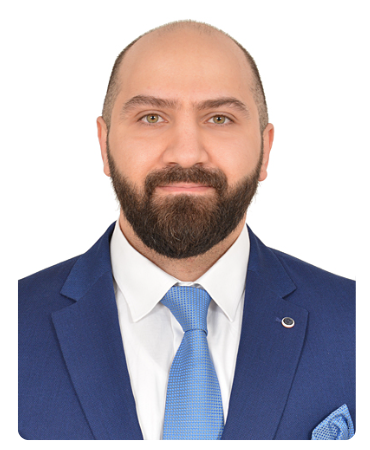

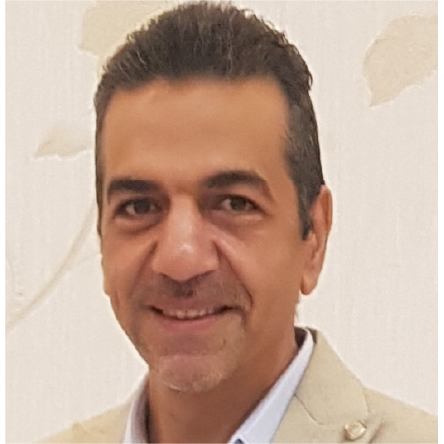

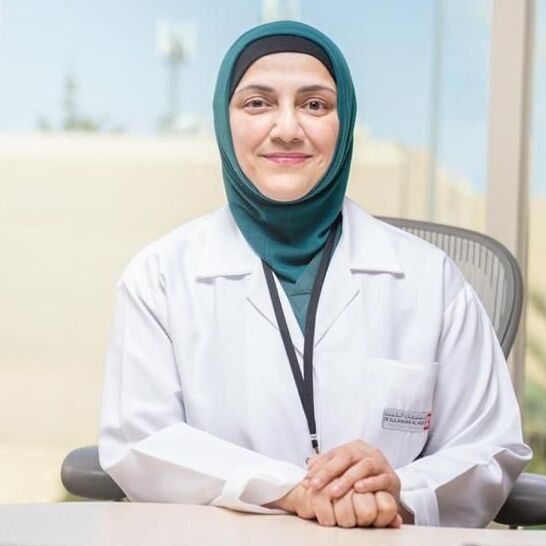

Learning Activity Description:
The Minimal Invasive and Operative
Care Module provides a comprehensive overview of key principles and best
practices in minimally invasive surgery and perioperative care. Participants
will gain knowledge and skills in pre-operative counselling, infection control,
surgical anatomy, intra-operative complication management, and post-operative
recovery strategies. The course also covers essential topics such as blood
transfusion, VTE prophylaxis, laparoscopy, and hysteroscopy techniques to
enhance patient safety and surgical outcomes.
Learning Activity Agenda:
|
Topic |
Speaker |
|
Pre-operative Care: Informed consent and
counselling |
Dr. Haitham Badr |
|
(Pre-operative
Care: Informed consent and counselling MCQs) |
|
|
Peri-operative
Care Part I: Infection control |
Dr. Shaziah Maqsood
|
|
(Peri-operative
Care Part I: Infection control MCQs) |
|
|
Peri-operative Care Part I: VTE Prophylaxis |
|
|
(Peri-operative
Care Part I: VTE Prophylaxis MCQs) |
|
|
Surgical Pelvic Anatomy |
Dr. Ahmad Chamsi |
|
(Surgical
Pelvic Anatomy MCQs) |
|
|
Intra-operative Care Part I: Intraoperative
complications |
Dr. Yasser Habash |
|
(Intra-operative
Care Part I: Intraoperative complications MCQs) |
|
|
Intra-operative Care Part II: Management of bowel
injury |
Dr. Yasser Habash |
|
(Intra-operative
Care Part II: Management of bowel injury MCQs) |
|
|
Intra-operative Care Part II: Management of Urinary
tract injury |
Dr. Yasser Habash |
|
(Intra-operative
Care Part II: Management of Urinary tract injury MCQs) |
|
|
Post-operative Care I: Hemodynamically unstable
patient and those with altered mental status |
Dr. Saleh Saleh |
|
(Post-operative
Care I: Hemodynamically unstable patient and those with altered mental status
MCQs) |
|
|
Post-operative Care II: ERAS + Management of Nausea/
Vomiting / Diarrhea |
Dr. Ahmad Chamsi |
|
(Post-operative
Care II: ERAS + Management of Nausea/ Vomiting / Diarrhea MCQs) |
|
|
Post-operative Care IV: Nerve injuries |
Dr. Hanan Mal |
|
(Post-operative
Care IV: Nerve injuries MCQs) |
|
|
VTE in pregnancy |
Dr. Jamil Elfarra |
|
(VTE in pregnancy
MCQs) |
|
|
Blood Transfusion
|
|
|
(Blood Transfusion
MCQs) |
|
|
Fluid media in hysteroscopy and Office Hysteroscopy |
Dr. Ahmad Chamsi |
|
Operative Hysteroscopy and Complications |
|
|
(Fluid media in
hysteroscopy and Office Hysteroscopy / Operative
Hysteroscopy and Complications MCQs) |
|
|
Principles of Laparoscopy and Safe Port Entry |
Dr. Haitham Badr |
|
Laparoscopic Intra and Post-Op Complications and
Management |
|
|
(Principles of
Laparoscopy and Safe Port Entry / Laparoscopic
Intra and Post-Op Complications and Management MCQs) |
|
|
Dictation of Operative procedures |
Dr. Haitham Badr |
|
(Dictation of
Operative procedures MCQs) |
Target Audience:
- Medicine and Surgery
- Obstetrics and Gynecology
Scientific Committee:
Learning Activity Objectives:
By the end of this course,
participants will be able to:
• Understand the fundamentals of
pre-operative patient preparation, including informed consent and counselling.
• Apply infection control measures
and VTE prophylaxis in the perioperative setting.
• Recognize key surgical pelvic
anatomy relevant to minimally invasive procedures.
• Identify and manage intra-operative
complications, including bowel and urinary tract injuries.
• Assess and manage post-operative
complications such as hemodynamic instability, altered mental status, nausea,
vomiting, diarrhea, VTE, and nerve injuries.
• Demonstrate knowledge of blood
transfusion protocols and fluid management in hysteroscopy.
• Safely perform operative
hysteroscopy and laparoscopy, including proper port entry and complication
management.
• Accurately dictate operative
procedures for documentation and communication.
Learning Outcome:
Upon successful completion of the
course, participants will:
• Exhibit a thorough understanding of
perioperative and intraoperative care principles.
• Apply evidence-based strategies to
minimize surgical risks and enhance patient recovery.
• Demonstrate proficiency in managing
surgical complications and emergencies.
• Implement safe and effective
techniques in hysteroscopy and laparoscopy.
• Improve documentation skills for
operative procedures, ensuring clarity and accuracy in surgical records.
Certificates
You have to attend 60% of the course to obtain the certificate.